Current status: architectural analysis, not an ACID compliance claim. The beta-0 evidence rating remains Unverified until repeatable failure, concurrency, reopen, and recovery tests establish each guarantee.
The central distinction
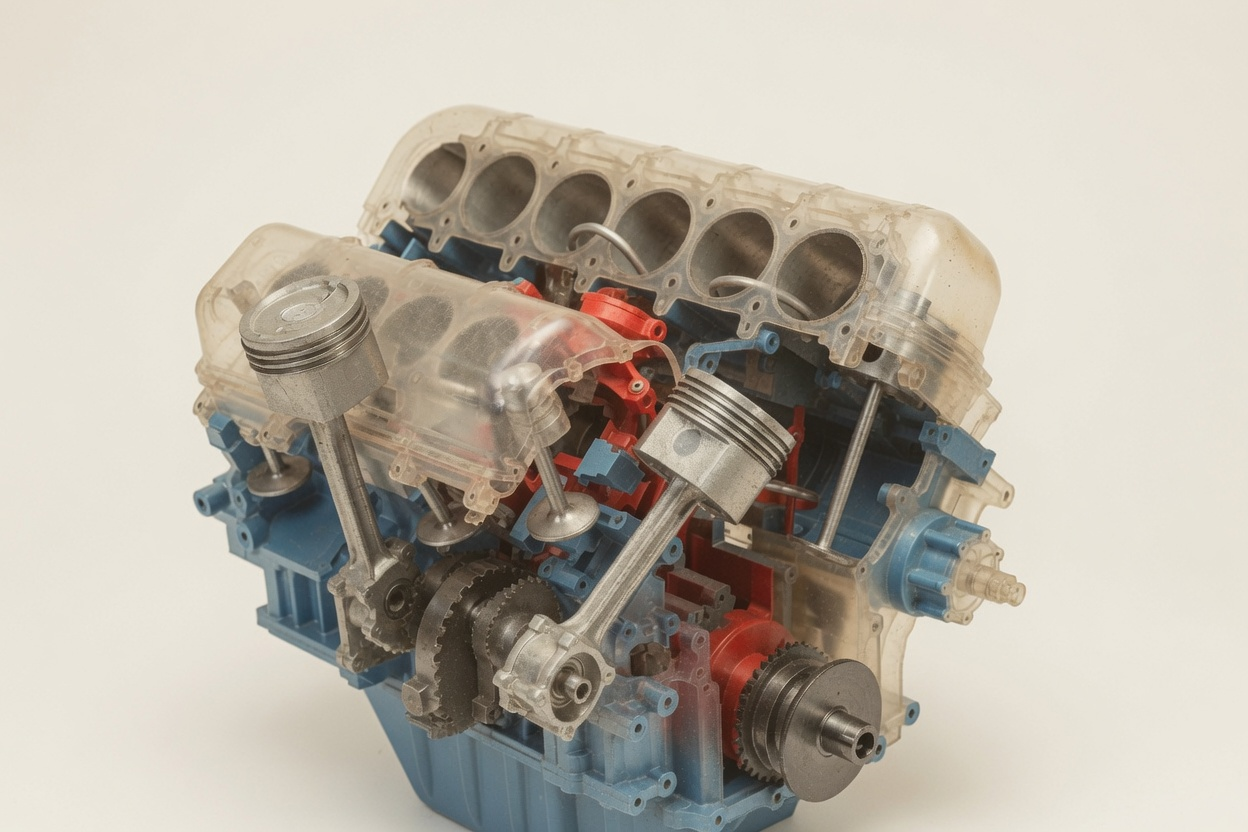
A glass-box educational architecture does not inherently weaken ACID. Visibility and transactional guarantees are separate dimensions. DotTalk++ can show buffers, stale fields, locks, commit boundaries, and recovery evidence without changing the correctness of the mechanisms underneath them.
The useful question is not whether the engine exposes its state. It is whether each operation, storage lane, and failure boundary provides a tested guarantee.
| Finding | Meaning | Example |
|---|---|---|
| Educational tradeoff | Complexity is exposed or staged deliberately for learning. | Showing dirty and stale fields before commit. |
| Implementation gap | A required mechanism is absent or incomplete. | A persistent cross-store recovery journal remains a stub. |
| Transactional guarantee | Repeatable evidence establishes a scoped behavior. | A crash/reopen test proves an acknowledged write survives. |
Two important corrections
Buffered state is not persistent inconsistency
A tuple-buffer edit can be dirty or stale while the persistent DBF and its indexes remain unchanged. The risk boundary occurs when a direct mutation or commit updates one participating store without updating, invalidating, rebuilding, or recovering the others.
The current COMMIT contract says partial commit is possible and that CDX/LMDB
rebuild is outside the command. These are explicit engineering and test
boundaries, not evidence for a broad compliance or failure claim.
Inspection does not weaken isolation
Showing a user their own pending changes does not weaken isolation. Isolation depends on session visibility, lock scope, versioning, conflict detection, and concurrent operation ordering. Buffering and per-record commit-lock mechanisms exist in source; the effective isolation model still requires captured multi-session tests.
ACID by property
| Property | Current rating | What exists | What must still be proved |
|---|---|---|---|
| Atomicity | Unverified | Pre-commit table-buffer rollback and per-record commit locking. | Interruption and recovery across DBF, memo, and index writes. |
| Consistency | Unverified | Visible dirty/stale state and validation mechanisms. | Invariants after direct mutation, successful commit, failed commit, and recovery. |
| Isolation | Unverified | Buffered state and commit locking mechanisms. | Dirty-read, repeatable-read, lost-update, conflict, and visibility behavior. |
| Durability | Unverified | LMDB-local commits and memo flush operations. | Acknowledgement, reopen, forced termination, and power-loss behavior for every store. |
Scope before score
ACID ratings belong to an operation and storage lane, not to a product name alone.
- buffered x64 mutation
- direct mutation
- LMDB-local mutation
- DBF + LMDB combined operation
- DBF + memo combined operation
- legacy index lane
A strong local guarantee cannot be generalized to a multi-store operation it does not cover.
Source-defined limits
COMMITdocumentspartial_commit_possible: yes.COMMITdoes not rebuild CDX or LMDB indexes.- persistent commit-journal and rollback-journal hooks are currently stubs.
- LMDB-local transactions do not prove a coordinated DBF + memo + index transaction.
These observations explain why the formal rating remains Unverified. They do
not diminish the value of the glass-box design; they identify exactly what the
project must test and harden.
ACID as a lesson
ACID is both an engineering objective and a Laboratory Campus lesson. A learner should be able to predict a guarantee, observe participating state, inject a safe failure into disposable data, reopen the stores, and assign an evidence-backed rating. A failed test is useful when preserved honestly because it converts an abstract acronym into a concrete requirement.
The canonical source analysis and lab contract live in the engine repository:
labtalk/docs/acid/acid_glass_box_analysis_v1.mdlabtalk/docs/acid/acid_assessment_beta-0.mdlabtalk/labs/acid/LAB_ACID_EDUCATIONAL_CONTRACT_v0.md
This public page is a reviewed derivative of those source documents.